Kick is genuinely different from the platforms most streamers have built their experience on, and that difference changes what actually works for growth. The revenue split is 95/5 in the creator’s favour, which means Kick has a structural incentive to help creators monetise that Twitch and YouTube simply don’t match. The category competition is a fraction of what it is on those platforms. The affiliate threshold, 75 followers and five hours of total streaming, is achievable for most new creators within their first few weeks if they approach it with any consistency at all.
The platform is also still genuinely open. New channels can appear prominently if the viewer count is there. Established creators from other platforms haven’t fully migrated, so the middle tier of any category is less saturated than the equivalent on Twitch. For streamers who are willing to think strategically about how the platform works rather than just copying what they did elsewhere, 2026 is a good time to be building on Kick.
How the Kick Algorithm Actually Works and Why It Matters for Strategy
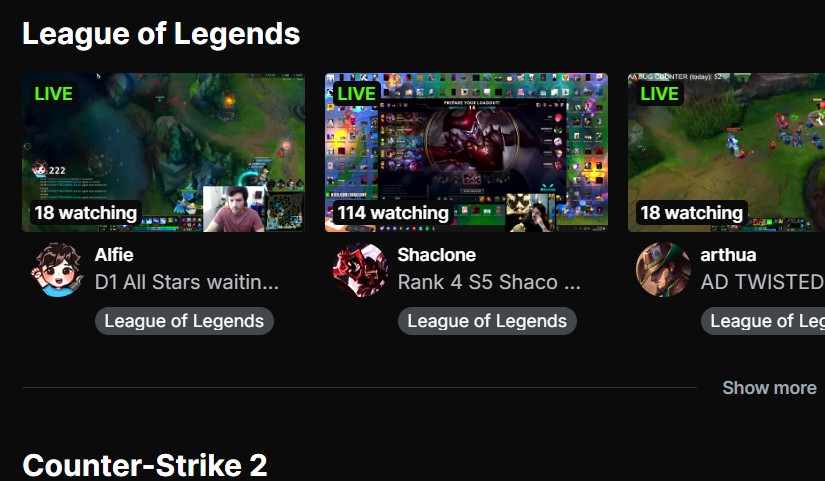
The Kick Browse page ranks streams primarily by concurrent viewer count. This is different from Twitch, which layers in follower count, subscriber history, and other signals. On Kick, the number of people watching you right now is the primary factor determining how visible you are in your category. High concurrent viewers push your stream up the rankings, which exposes you to more organic discovery, which brings more viewers, which maintains or improves your ranking.
The practical implication is that the early minutes of a stream matter enormously. A channel that goes from zero to fifteen viewers in the first twenty minutes is going to get more organic discovery than one that sits at two viewers for the first hour and peaks at twelve later. This is why building a core audience that shows up reliably and early is more valuable than the same number of followers who engage unpredictably.
Chat interaction is the other key signal. The algorithm rewards what some experienced Kick streamers call reaction velocity: streams with active, fast-moving chat perform better than streams where viewers are passive. Engaging your chat aggressively, responding to messages by name, asking questions, creating reasons for chat to respond, isn’t just good community practice on Kick. It directly affects how the platform treats your stream.
Building the Core Audience That Actually Shows Up
The most common mistake new Kick streamers make is optimising for follower count when what matters operationally is who’s watching live. A thousand followers who never show up when you go live is worth much less than three hundred followers who appear within five minutes of you going live every time.
Building that core audience starts with consistency and predictability. Stream on a regular schedule and stick to it. Not occasionally or when you feel like it, but to a published schedule that your audience can form a habit around. Viewers who know you stream every Tuesday, Thursday, and Saturday at 7pm can plan around it. Viewers who get a Discord notification that you went live at an unpredictable time have to decide in the moment whether to drop what they’re doing, and many won’t.
Discord is underused by newer streamers and is one of the highest-leverage tools for Kick growth. The channel functions as your community hub between streams: posting schedules, sharing clips, running polls about content direction, and keeping people engaged with you and each other when you’re not live. The Discord members who are genuinely invested in the channel are the ones who will show up early, bring their friends, and keep chat moving in the first critical minutes of a stream.
Raiding other streamers of similar size, and building reciprocal raid relationships with channels whose audiences overlap with yours, is one of the most effective legitimate growth tactics on Kick. When you end your stream by raiding another channel with your audience, and they return the favour at the end of theirs, you’re introducing each other’s communities to a new creator in the most natural possible context. The viewer who arrives through a raid is already in viewing mode and more likely to stick around than one who clicks through from a clip.
Cross-Platform Content as a Discovery Engine
Growing on Kick exclusively by streaming on Kick is the slow path. The faster path runs through the short-form video platforms.
TikTok, YouTube Shorts, and Instagram Reels function as discovery engines that introduce your content to people who have never heard of you and who aren’t already on Kick looking for streams to watch. A thirty-second clip of your best or funniest moment from last week’s stream, with your Kick handle visible in the caption, reaches people who would never have found you through category browsing. If the clip is engaging enough to hold attention, some of them will come to the next stream.
The clips that perform best on short-form platforms are the ones with a clear hook in the first two seconds, a payoff that arrives before the audience loses interest, and a reason to care about who is delivering it. Reaction content, skill demonstrations, genuinely funny moments, hot takes on things your target audience cares about: all of these can work if the clip is well cut and the hook is strong. Long atmospheric moments that feel rewarding in a live context rarely translate.
The mechanics of posting across platforms matter. Upload natively to each platform rather than crossposting the same video. Some platforms downrank posts that push viewers off-platform, so mentioning your Kick channel in the caption or in your bio is often more effective than a direct link in the post itself. Consistency on short-form content is as important as consistency in streaming: two or three clips per week, posted on a schedule, compounds into a meaningful discovery funnel over months.
Niche, Category, and the Competition Math
The competitive landscape on Kick differs significantly by category. Fortnite and Minecraft have significant streaming populations. More specific games, niche categories, and IRL content areas have dramatically fewer competing channels at any given time.
The case for choosing a less competitive category is direct: fewer channels competing for the same pool of organic viewers means a higher chance of appearing near the top of the category with modest viewer counts. A channel with twelve concurrent viewers might be invisible in a major game category and prominent in a smaller one. The viewers in that smaller category are still real people who might follow you, and appearing at the top of any category is better than appearing midway down a major one.
This doesn’t mean streaming games you hate for the sake of discoverability. Authenticity in content is real and audiences detect its absence. The better approach is looking for the intersection of what you genuinely enjoy and what categories on Kick are underserved relative to the apparent audience interest. Some game genres have far more viewers than active streamers in their category, which creates a discoverability opportunity for a creator who wants to stream that type of content anyway.
The Viewer Bot Question: What It Is and Why It Tends to Backfire
The Kick viewer bot service category exists because the platform’s ranking system is based on concurrent viewers, which creates an obvious temptation to inflate that number artificially. A Kick viewer bot service sends fake automated viewers to your stream to push it up the category rankings, with the idea that more organic viewers will then discover it.
The logic is not entirely without merit: appearing higher in a category does increase the probability of organic discovery. But the execution tends to fail in the same ways across different platforms. Bot viewers don’t engage in chat, which means a channel with elevated viewer counts but minimal chat activity looks exactly like what it is.
If you do go down the route of using a bot service, make sure to continue growing the channel in organic ways as well. Relying on one avenue of growth isn’t going to work long term.
The Monetisation Threshold and Why Early Focus Matters
Kick affiliate requires 75 followers and five total hours of streaming. This is a low bar set deliberately to get creators into the monetisation ecosystem quickly. The 95/5 revenue split that follows means that even modest subscriber numbers generate meaningful income relative to equivalent performance on other platforms.
The strategic implication is that the early period of building on Kick is short enough and the monetisation accessible enough that putting significant effort into the growth phase before affiliate is a rational investment. Three months of consistent streaming, active cross-platform promotion, and genuine community building through Discord will typically take a new channel from zero to a position where monetisation is real and growing. That’s not a promise about specific outcomes, because individual results vary substantially with niche, personality, content quality, and timing. But the platform’s structural advantages mean the effort-to-outcome ratio in 2026 is better on Kick than on most alternatives for new creators starting from scratch.
The underlying reality is that sustainable Kick growth in 2026 comes from the same place all sustainable audience growth has always come from: consistent quality, genuine community investment, and making it easy for the right people to find you.
Leave a Reply