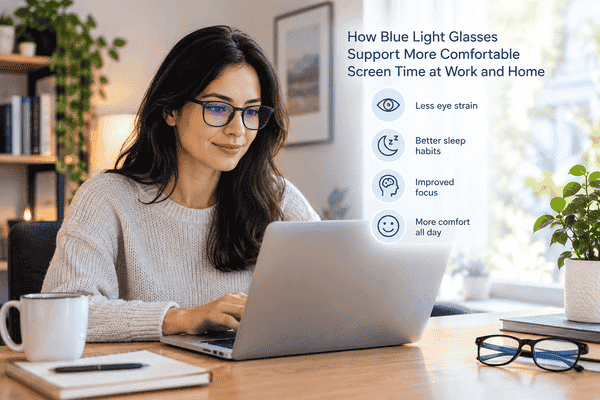
Screens have become part of nearly every stage of the day. A laptop may handle the workday, a phone fills the gaps between meetings, and a tablet or television often takes over during the evening. Spending so many hours looking at digital displays can leave the eyes feeling tired, especially when screen habits, lighting, and workstation setup are less than ideal.
Blue light glasses have become a popular option for people who want eyewear designed with digital routines in mind. They can fit naturally into a wider approach to screen comfort that also includes regular breaks, thoughtful lighting, and a well-arranged workspace.
Why Long Hours in Front of Screens Can Feel Tiring
Digital eye discomfort is rarely tied to one single cause. Long periods of close-up focus can make the eyes feel strained, while people also tend to blink less when concentrating on a screen. Glare, reflections, small text, poor posture, and an overly bright display can add to the problem.
A desk positioned directly beneath harsh lighting may produce reflections across a monitor. A screen that is much brighter than the surrounding room can also feel unpleasant after several hours. Even sitting too close to a display or working with text that is difficult to read may make a long session feel more demanding.
This is why screen comfort usually comes down to a combination of habits. Glasses may be one part of that setup, alongside changes to the way a person works, studies, plays games, or relaxes with digital devices.
Where Blue Light Glasses Fit Into Everyday Screen Use
People who regularly move between laptops, monitors, tablets, and phones may choose blue light glasses for screen use as part of their everyday eyewear routine.
Blue light filtering lenses are designed to filter portions of blue-violet light. Some options also include anti-reflective coatings, which can help reduce reflections on the lenses. EyeBuyDirect offers several types of digital-protection lenses with blue-violet light filtering, including options that pair filtering technology with anti-glare features.
It is useful to keep expectations realistic. Research has not established that blue light from computer screens causes eye damage, and studies on whether blue-blocking lenses relieve digital eye strain have produced mixed findings. The American Academy of Ophthalmology does not recommend special eyewear solely to protect the eyes from computer-screen light.
That does not mean people cannot prefer blue light filtering lenses as part of their daily routine. Many wearers simply like having eyewear designed for environments where screens, artificial lighting, and reflections are common.
Making the Workday More Comfortable
A few changes around the desk can make long computer sessions easier to manage.
Start with the position of the monitor. The screen should be far enough away that text can be read comfortably without leaning forward. Increasing the font size is often more useful than moving closer to the display.
Lighting matters too. Strong light behind or above the screen can create glare, while a dark room paired with a very bright monitor can be uncomfortable. Adjusting screen brightness so it feels closer to the surrounding light level can create a more pleasant viewing experience.
Regular distance changes can also help. After spending time focused on a monitor, looking across the room or out a window gives the eyes a chance to shift focus. Getting up periodically also breaks the pattern of sitting in the same position for hours.
For people who already wear glasses, choosing lenses suited to frequent computer use can make eyewear feel like a natural part of the workstation rather than an added step.
Bringing Better Screen Habits Home
Screen time rarely ends when the workday does.
Streaming a show, checking social media, gaming, reading on a tablet, taking an online course, or catching up on personal messages can add several more hours of digital viewing. That makes the home environment just as relevant as the office.
Simple adjustments can help. Lowering excessive screen brightness, avoiding distracting reflections, sitting at a comfortable viewing distance, and taking occasional breaks can make evening screen sessions feel less demanding.
Eyewear can also move easily between these settings. Someone who wears blue light filtering glasses while working on a laptop may choose to keep using them while gaming, studying, or browsing later in the day.
The goal is not to treat glasses as a substitute for healthy screen habits. They work better as one part of a routine designed around comfort.
What to Look for in Blue Light Glasses
Comfort should come first when choosing glasses that may be worn for several hours.
A frame that fits well around the nose and ears is less likely to become distracting during a long work session. People who need vision correction can look for blue light filtering options that work with their prescription, while those who do not need prescription lenses may prefer non-prescription versions.
Lens appearance may matter too. Older blue light glasses were often associated with noticeable yellow lenses, but many newer designs use clear-looking lenses with only a subtle tint. EyeBuyDirect notes that its current blue light filtering options are designed to look natural enough for everyday wear.
Anti-glare or anti-reflective features may also be worth considering for people who regularly deal with overhead lights, bright offices, or reflections from nearby windows.
Frame style is largely personal. A pair that works equally well during video meetings, at a home desk, and during casual evening use may be more likely to become part of the daily routine.
A More Comfortable Way to Spend Time on Screens
Digital devices are deeply woven into work, communication, learning, and entertainment. Rather than trying to avoid screens altogether, many people can benefit from paying closer attention to how they use them.
Good lighting, comfortable viewing distances, readable text, regular breaks, and thoughtful eyewear choices can all contribute to a more pleasant setup. Blue light glasses can fit naturally into that routine for people who prefer lenses designed with digital environments in mind.
When screen time takes up a large part of the day, small adjustments to the way a workspace or home setup feels can make those hours easier to manage.
Leave a Reply