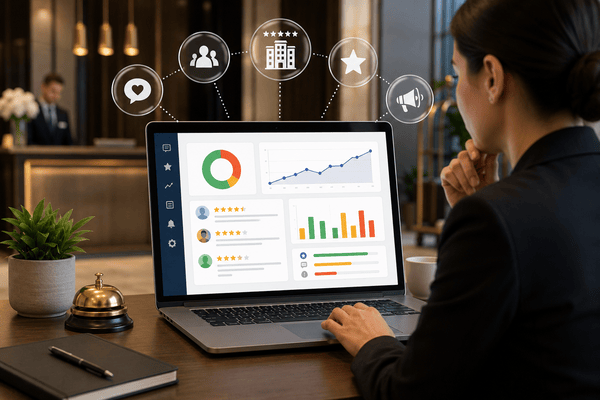
Online reviews have become one of the most influential factors in the hotel booking process. Before making a reservation, travelers routinely compare ratings, read guest feedback, and evaluate how properties respond to concerns. According to industry research, more than 80% of travelers read reviews before booking accommodations, while guest ratings continue to have a direct impact on occupancy levels and revenue performance. As review volume grows across platforms, managing online reputation has become a critical business function rather than a marketing afterthought.
For many hotels, the challenge lies in monitoring and responding to feedback spread across multiple channels, including review websites, online travel agencies, social media platforms, and search engines. Without a centralized approach, valuable insights can be missed, response times may increase, and reputation issues can escalate before they are addressed. Effective hotel reputation management requires continuous monitoring, timely engagement, and the ability to identify trends in guest sentiment.
This is where reputation management software provides significant value. By consolidating reviews, automating alerts, analyzing sentiment, and simplifying response workflows, these platforms help hotels maintain a strong online presence and improve guest satisfaction. However, with the global hospitality software market expected to continue expanding through 2027 and beyond, selecting the right solution requires careful evaluation of features, integrations, reporting capabilities, and long-term scalability.
Key Features to Look for in Hotel Reputation Management Software
Effective hotel reputation management depends on having a clear, real-time understanding of what guests are saying across all digital channels. Modern tools go beyond simple review tracking and focus on automation, analytics, and actionable insights that help hotels improve guest satisfaction and business performance. As guest expectations rise, the right system becomes a core part of operational and marketing strategy.
A key capability is centralized review monitoring across OTAs, search engines, and social media platforms. Instead of checking multiple sources manually, hotels can view all guest feedback in one place, ensuring no comment or review is missed. Alongside this, automated review collection helps increase feedback volume by sending timely post-stay requests via email, SMS, or messaging apps, making it easier to gather consistent guest insights.
Advanced platforms also use AI-powered sentiment analysis to detect patterns in guest feedback, identifying recurring issues or emerging trends before they impact performance. Combined with review response management and workflow automation, teams can respond faster, maintain brand consistency, and reduce manual workload. These systems often include competitor benchmarking and reputation score tracking, allowing hotels to measure their performance against similar properties and adjust strategies accordingly.
For larger hotel groups, multi-property support is essential, enabling centralized oversight while still maintaining property-level control. Finally, reporting dashboards turn large volumes of feedback into clear, actionable insights, helping management connect reputation metrics directly to operational improvements and revenue outcomes.
How to Evaluate and Compare Different Solutions
Choosing the right hotel reputation management software requires more than comparing feature lists. Hotels need to evaluate how well a solution fits into existing operations, supports long-term growth, and delivers measurable value across departments. A structured evaluation process helps avoid costly mismatches and ensures smoother adoption across teams.
A key factor is ease of use and adoption for hotel staff. Even the most advanced system will fail to deliver value if front desk teams, marketing staff, or managers find it difficult to use on a daily basis. Intuitive interfaces, minimal training requirements, and clear workflows are essential for ensuring consistent usage and accurate data input across the organization.
Integration capabilities are equally important. The software should connect seamlessly with core systems such as PMS, CRM, booking engines, and marketing tools to ensure a unified data flow. Without strong integrations, hotels risk recreating data silos, reducing the overall value of the platform. Scalability is another critical consideration—solutions must support independent hotels, resorts, and multi-property groups without performance issues or complex reconfiguration as operations expand.
Hotels should also carefully evaluate data security, compliance standards, and vendor support quality. Protecting guest data and ensuring compliance with regulations such as GDPR is essential, especially when handling large volumes of customer feedback. At the same time, responsive vendor support can significantly reduce downtime and improve system reliability during critical operations.
Pricing models and total cost of ownership should be assessed beyond the initial subscription fee. Implementation costs, training, integration work, and ongoing maintenance all contribute to the real investment required. Finally, asking vendors targeted questions—such as how they handle data migration, system updates, and scalability challenges—helps hotels identify whether a solution is truly aligned with their operational and strategic needs.
Implementation Best Practices for Long-Term Success
Successful implementation of hotel reputation management software starts long before the system goes live. Hotels that clearly define their goals and KPIs upfront—such as improving average review ratings, increasing response rates, or boosting direct bookings—are better positioned to measure impact and optimize performance over time. Without these benchmarks, even advanced tools can become underutilized or disconnected from business outcomes.
A structured internal process is also essential. Establishing review response guidelines ensures consistency in tone, timing, and brand messaging across all channels. Clearly defined team responsibilities help avoid delays and ensure that guest feedback is addressed promptly. When combined with consistent workflows, this creates a reliable system for managing both positive and negative reviews in a professional and efficient manner.
Beyond response management, guest feedback should actively inform operational improvements. Hotels can use review data to identify recurring service issues, enhance staff training, and refine guest experiences across departments. This turns reputation management into a continuous improvement loop rather than a reactive process. Equally important is staff training—ensuring teams understand how to use the software effectively maximizes adoption and overall value.
Technology partners also play a key role in successful implementation. Companies like COAX Software, with expertise in hotel management software development, help hotels integrate reputation management tools into a broader digital ecosystem. This ensures seamless data flow between systems such as PMS, CRM, and booking platforms, enabling a more unified and scalable approach to guest experience management.
Turn Guest Feedback Into a Competitive Advantage
Selecting the right reputation management platform comes down to more than feature comparison. Hotels need a solution that centralizes guest feedback, automates review collection, enables meaningful analysis, and scales with operational complexity. When these elements work together, reputation data becomes a reliable source of business intelligence rather than just a reporting metric.
Long-term success depends on combining technology with well-defined internal processes and a genuinely guest-centric approach. Software alone cannot improve reputation without consistent response practices, clear ownership, and a culture of using feedback to refine service quality. When integrated properly, reputation management becomes part of daily operations rather than an isolated marketing function.
Ultimately, the most effective solutions are those that go beyond monitoring reviews. They actively support continuous improvement, helping hotels identify service gaps, enhance guest satisfaction, and strengthen loyalty over time. By choosing the right platform and embedding it into broader operational workflows, hotels can transform guest feedback into a lasting competitive advantage.
Leave a Reply