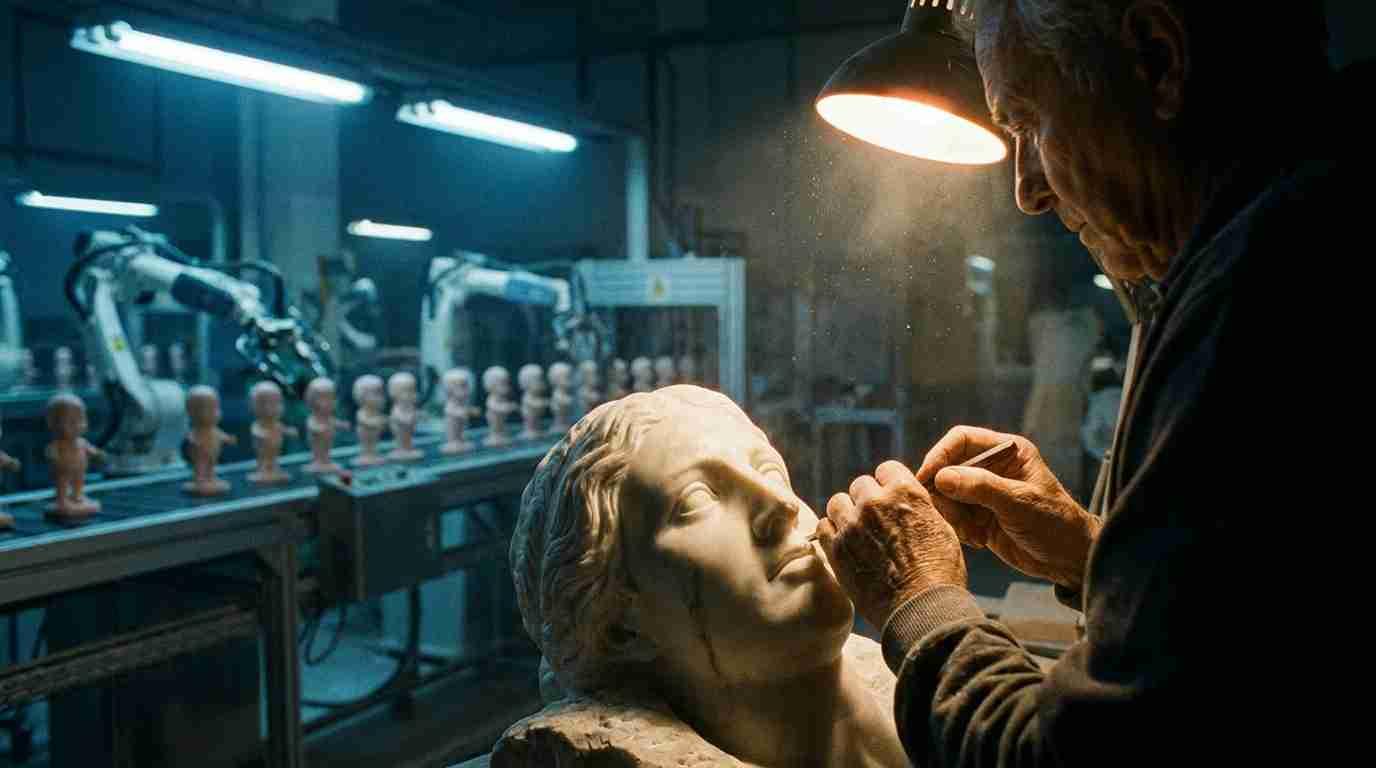
Every modern ad team knows the pain: spend hours on a single creative, only to realize halfway through that you actually need 20–30 variations for testing. The bottleneck is rarely the idea; it’s the manual design, resizing, and adjustments that eat up days. Enter AI‑driven ad design workflows, which promise to turn that bottleneck into a pipeline: brief in, AI ad generator out, variants everywhere, and the whole team moving at social‑feed speed instead of calendar‑time speed.
Among the tools shaping that shift, Higgsfield and Creatopy stand out in very different ways. The core difference lies in their workflow fit: Higgsfield leans into cinematic, AI‑driven video ads, while Creatopy focuses on template‑driven, multi‑format ad design with heavy emphasis on collaboration and brand control. If you treat “ad design” as a sequence of steps brief, generate, modify, review, resize, approve, export then the real question is not just which tool looks better, but which weaves into your existing stack with the least friction.
Across performance‑driven marketing teams, the brands that ship most effectively are the ones that standardize workflows and automate repetitive tasks. In that context, ai ad generator tools are not just fancy add‑ons; they are the engines that power rapid iteration at scale. For brands that care about creative velocity, consistency, and collaboration, understanding how Higgsfield’s AI ad generator and Creatopy’s design engine stack up can be the deciding factor between slow, fragmented ad production and fluid, repeatable ad design workflows.
1. Higgsfield: Video‑First, AI‑Driven Ad Design
Higgsfield positions itself as a full‑fledged AI ad generator for short‑form, cinematic video ads, particularly for TikTok, Instagram Reels, and YouTube Shorts. Its core strength is using diffusion models and AI to turn a product URL, product images, or a short script into multiple ready‑to‑use ad concepts. The platform’s workflow begins with a very simple input often a product page or brand brief and then auto‑generates several video concepts that encode common hooks, pacing patterns, and on‑screen text layouts observed in top‑performing social content. This means you are not starting from a blank canvas; you are starting from a set of AI‑ suggests that already understand what tends to work.
For ad design workflows, Higgsfield’s is strongest when the primary output is video. The AI ad generator can spin 20–50 variations of a single concept quickly, each with slightly different hooks, pacing, timing, and on‑screen text. Those variations can be scored based on likely engagement signals, which helps your team prioritize which ones to put into live tests. Higgsfield’s interface is built for rapid iteration: you can edit, tweak, and generate new cuts without leaving the platform, and it exports in multiple aspect ratios vertical, square, and horizontal ready for most major ad platforms.
Another key strength of Higgsfield’s AI ad generator is its ability to maintain consistent characters, avatars, and brand treatments across variants. You can define a virtual spokesperson, pick a brand‑aligned voice style, and then generate multiple ad cuts with the same on‑screen personality but different scripts, angles, or background scenes. That consistency is critical for ad design workflows, because it ensures that stylistic experimentation doesn’t dilute your brand identity. Over time, Higgsfield starts to feel less like a one‑off generator and more like a repeatable, branded AI studio that can be woven into a larger production pipeline.
From a collaboration standpoint, Higgsfield’s AI ad generator integrates with standard ad‑creation environments by exporting finalized clips, thumbnails, and captions directly into ad managers or into tools like Zapier, Airtable, or custom pipelines. For teams that want to blend AI‑driven ideation with light manual editing, Higgsfield offers a hybrid model: AI generates the raw concepts, and your team refines them. This is especially powerful for agile ad‑design workflows, where you need to push dozens of concepts through short approval cycles instead of long, frame‑by‑frame edits.
2. Creatopy: Multi‑Format, Template‑Driven Ad Design
While Higgsfield focuses on video, Creatopy focuses on multi‑format, template‑driven ad design that spans banners, social posts, and landing‑page‑style creatives. The platform is built around the idea that modern ad design is not just about video, but about consistency across formats: what looks good on Instagram must also work on Meta newsfeed, Google Display, and email‑linked banners. Creatopy’s AI ad generator tools sit inside a larger design environment that emphasizes brand control, standardized workflows, and team‑based approval cycles.
Creatopy’s workflow is template‑driven and layer‑aware. You can create a master creative template, lock down brand colors, fonts, and logo positions, and then auto‑generate dozens of variations that swap copy, images, CTAs, or background treatments. This is particularly powerful for teams that want to run A/B tests on static creatives, build multi‑format campaigns, or repurpose core designs across channels. The AI ad generator tools within Creatopy can auto‑resize designs for 100+ formats, generate text, suggest layouts, and maintain brand consistency across outputs.
For collaboration, Creatopy shines with its workspace‑style structure. You can invite team members, create versioned designs, leave comments, and track approvals as creatives move from concept through review to export. For teams that live inside a strict creative‑ops process briefing, asset creation, review, approval, deployment Creatopy feels like a natural extension of that flow. The platform’s AI ad generator tools are designed to reduce manual resizing, copy‑editing, and layout tweaks, so that the creative team can focus more on brand strategy and less on pixel‑perfect tweaks.
Because Creatopy is primarily template‑driven, it is an excellent fit for teams that want to systematize display and social‑image creatives. You can define master templates for Meta, Google, and TikTok banners, then use AI to auto‑populate them with localized copy, different CTAs, and performance‑tuned color palettes. That structured, repeatable workflow is exactly what makes Creatopy stand out when evaluating workflow fit: it is less about cinematic storytelling and more about visual consistency, brand control, and multi‑format efficiency.
3. How Ad Design Workflows Are Structured (And Where Each Tool Fits)
Modern ad design workflows are rarely linear; they are loops. The cycle typically looks something like this: brief → generate → review → resize/repurpose → test → scale → learn → iterate. The deeper you integrate AI ad generator tools into this loop, the faster you can turn ideas into experiments and learn‑driven optimizations. The critical difference between Higgsfield and Creatopy is where each tool sits in that loop and how it handles the “generate” and “resize/repurpose” stages.
Higgsfield’s AI ad generator excels at the video‑driven “generate” phase. You can drop a product link or brand brief in, generate dozens of video concepts, and then push those directly into testing environments. The platform is built for speed and narrative variation, so it’s ideal for exploring different hooks, pacing, and on‑screen text treatments. If your workflow is video‑heavy think TikTok, Instagram Reels, or YouTube Shorts Higgsfield’s AI ad generator is a natural fit for the first half of your loop, where you are testing formats and stories.
Creatopy, on the other hand, excels at the multi‑format, template‑driven “resize and repurpose” phase. You can take a core concept or asset often a video or a hero image and then auto‑generate dozens of static and banner‑style creatives that fit dozens of formats and channels. This is ideal for teams that want to systematically convert one strong concept into a broad library of creatives that feel consistent but distinct. If your workflow is built around displays, carousels, and banner‑style creatives, Creatopy’s AI ad generator tools fit more neatly into the second half of the cycle, where you are scaling and adapting.
Another way to think about workflow fit is by team size and creative style. Agile, video‑first teams that like to experiment with narratives, hooks, and pacing will tend to lean into Higgsfield’s AI ad generator, using it like a creative lab where hundreds of concepts are cheap and fast. In contrast, larger, process‑driven teams that want to enforce brand consistency, standardized templates, and multi‑format delivery will gravitate toward Creatopy, using it like a well‑defined assembly line for creatives.
4. Strengths and Weaknesses: Which Tool Fits Your Design Workflow?
Deciding which tool is “better” for ad design workflows comes down to your team’s creative priorities and how you structure your workflow. Higgsfield’s AI ad generator is best suited for:
- Video‑driven, short‑form formats (TikTok, Reels, Shorts).
- Narrative experimentation: testing different hooks, pacing, and on‑screen text treatments.
- Agile teams that want to move from brief to testable video concepts in minutes.
- AI‑driven storyboarding: AI suggesting ad concepts that feel like rough cinematic drafts.
In these contexts, Higgsfield’s AI ad generator is less of a design tool and more of a creative lab; it helps you generate ideas, then you can refine them in other tools if needed. For teams that want to combine AI‑driven ideation with manual polish, Higgsfield sits at the front of the workflow, where you’re building a library of concepts to test.
Creatopy, by contrast, is stronger for:
- Multi‑format, multi‑channel workflows (banners, social images, landing‑page creatives).
- Brand‑control‑heavy environments that lock down colors, fonts, and layouts.
- Collaborative teams that need version control, comments, and approval flows.
- Template‑driven campaigns where each ad is a variation of a master design.
For teams that want to systematize display and email creatives, or to scale one concept into dozens of banner‑style variants, Creatopy’s AI ad generator tools are a natural fit. It’s less about cinematic storytelling and more about consistency, predictability, and cross‑channel delivery.
The trade‑off, naturally, is that Higgsfield’s AI ad generator is less about pixel‑level, template‑driven control, and Creatopy is less about cinematic, story‑driven video experimentation. The right choice is the one that matches your core workflow: if you treat video storytelling as the primary engine for performance, Higgsfield is likely the better fit; if you treat multi‑format, brand‑consistent display creatives as the core of your workflow, Creatopy will feel more natural.
5. How to Combine Them (or Choose One) for Maximum Workflow Power
For many brands, the ideal setup is not “either Higgsfield or Creatopy” but “both, in the right places.” A high‑performing ad design workflow often involves both exploratory and optimization phases. The exploratory phase is about generating and testing lots of ideas quickly, while the optimization phase is about refining and scaling the best‑performing concepts across formats and channels. Higgsfield’s AI ad generator fits naturally into the exploratory phase, where you generate dozens of video concepts and test different narratives and hooks. Creatopy then fits into the optimization phase, where you take the winning narratives and turn them into a library of consistent, multi‑format creatives suitable for broader deployment.
In practice, this might look like:
- Use Higgsfield’s AI ad generator to create 30–50 video concepts for a new product or campaign.
- Test those concepts across platforms to identify which narrative, hook, and pacing patterns perform best.
- Take the winning concept and feed it into Creatopy, where you auto‑generate dozens of banner‑style and social‑image creatives based on that core concept.
- Use Creatopy’s AI ad generator tools to resize, rebrand, and test variations across formats, then scale the best‑performing ones.
This two‑phase approach leverages the strengths of both tools: Higgsfield’s AI ad generator for rapid idea generation and storytelling, and Creatopy’s AI‑driven design engine for brand‑consistent, multi‑format scaling. It also helps you avoid the common pitfall of testing too many variables at once, because each tool is focused on a specific kind of creative variation.
Krea puts 64+ image and video models in one subscription, so you can generate ad visuals, explore 1000+ styles for variations, and make product-safe edits with Krea 3 in under 8 seconds. It’s a quick way to produce and iterate on creative before laying it out in Creatopy. There’s a free plan, and paid plans start at $9/month.
If you must choose only one tool, the decision should again be driven by workflow fit. For teams that live in the world of video storytelling and want to maximize creative experimentation, Higgsfield’s AI ad generator is likely the better partner. For teams that live in the world of multi‑format, brand‑consistent ad design and want to minimize manual resizing and layout work, Creatopy is the more natural fit. In either case, the underlying principle is the same: the better your AI ad generator tools integrate into your existing ad design workflow, the faster you can move from idea to test to scale, and the more your creative pipeline becomes a true competitive advantage.
To connect this with a widely recognized principle, many marketing experts also stress that importance of creative testing in ads through structured testing, data‑driven iteration, and platform‑specific adaptation is what separates good campaigns from truly great ones. When you wire an AI ad generator tool like Higgsfield or Creatopy into that kind of workflow, you’re not just building pretty assets; you’re building a feedback loop that learns, adapts, and improves over time.
Leave a Reply